
 Harley Mier
 Male pectoral implants are solid silicone devices surgically placed beneath the pectoralis major muscle to create more developed, defined chest contours. They’re a popular option for men who, despite consistent training, simply can’t build the pectoral definition they want due to genetics or other limiting factors.
For some men, no amount of bench pressing seems to build the chest definition they’re after, and that’s exactly the gap pectoral implants are designed to close.
Why Some Men Can’t Build the Chest They Want
Genetics sets a ceiling that training alone sometimes can’t break through.
Genetics plays a significant role in how a man’s pectoral muscles respond to training, and for some men, that ceiling is frustratingly low regardless of how dedicated their workout routine is. Pectoral implants address this issue by adding a solid, sculpted contour underneath the existing muscle rather than relying on further muscle growth.
What Pectoral Implants Actually Are
Pectoral implants are made from a solid, pliable silicone polymer or cohesive silicone gel, firm enough to convincingly emulate natural muscle definition when placed beneath the chest tissue. Unlike some other implant types, they’re designed specifically to mimic the look and feel of well-developed pectoral muscles.
How the Procedure Works
The procedure is performed under general anesthesia, with the solid silicone implants inserted through a small incision typically placed in the armpit. The implants are positioned beneath the pectoralis major muscle, which remains fully intact and functional, meaning normal chest muscle use and exercise are still possible once healing is complete.
Who Tends to Consider This Procedure
Pectoral implants are often chosen by athletic men who train consistently but still can’t achieve the chest definition they want due to genetics, as well as men looking to enhance an already fit physique with more pronounced, sculpted chest contours.
What Recovery Involves
Most surgeons recommend avoiding exercise for four to six weeks after surgery to allow the implants to settle and the tissue to heal properly, along with avoiding heavy lifting for around six weeks. Once fully healed, the pectoral muscle functions normally and can be trained just as before.
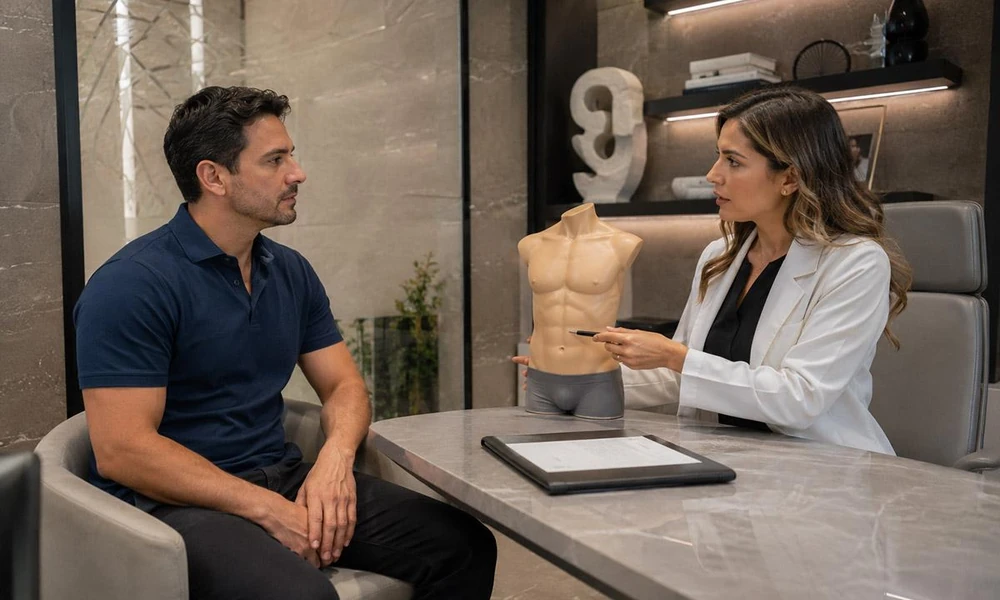
If you’ve struggled to build the chest definition you want despite consistent training, board-certified plastic surgeon Dr. Siamak Agha can discuss whether pectoral implants are right for you during a consultation in Newport Beach.
Ready to explore pectoral implants? Schedule a consultation with board-certified plastic surgeon Dr. Siamak Agha at The One Plastic Surgery Center in Newport Beach to discuss your goals and options.
Results and candidacy vary by patient. A consultation is required to determine your individual suitability for any procedure discussed in this article.
FAQ
What are male pectoral implants made of? They’re made from a solid, pliable silicone polymer or cohesive silicone gel designed to be firm enough to emulate natural muscle definition.
Who typically gets pectoral implants? Athletic men who train consistently but can’t achieve their desired chest definition due to genetics, as well as men wanting to enhance an already fit physique.
Where is the incision made for pectoral implant surgery? The implants are typically inserted through a small incision placed in the armpit.
Will I still be able to work out my chest after getting pectoral implants? Yes, the pectoralis major muscle remains fully intact and functional, so normal chest training is possible once healing is complete.
How long is recovery after pectoral implant surgery? Most surgeons recommend avoiding exercise for four to six weeks and heavy lifting for around six weeks to allow proper healing.








Recent Comments