
 Mattie T. Anderson
 Most parents picture chiropractic as something for stiff necks and bad backs after age forty. The idea of taking a baby or a six-year-old in for an adjustment can feel strange the first time it comes up. At Dakota Chiropractic in Apple Valley, Dr. Hannah Steinmetz hears that hesitation almost every week, and she understands it on a personal level. Her own introduction to chiropractic came as a kid with chronic ear infections that nothing else seemed to fix. A few visits to a chiropractor changed the trajectory of her health, and eventually her career.
Pediatric chiropractic looks nothing like the adult version most people are familiar with, and knowing that ahead of time tends to make the decision much easier.
What a Pediatric Adjustment Actually Looks Like
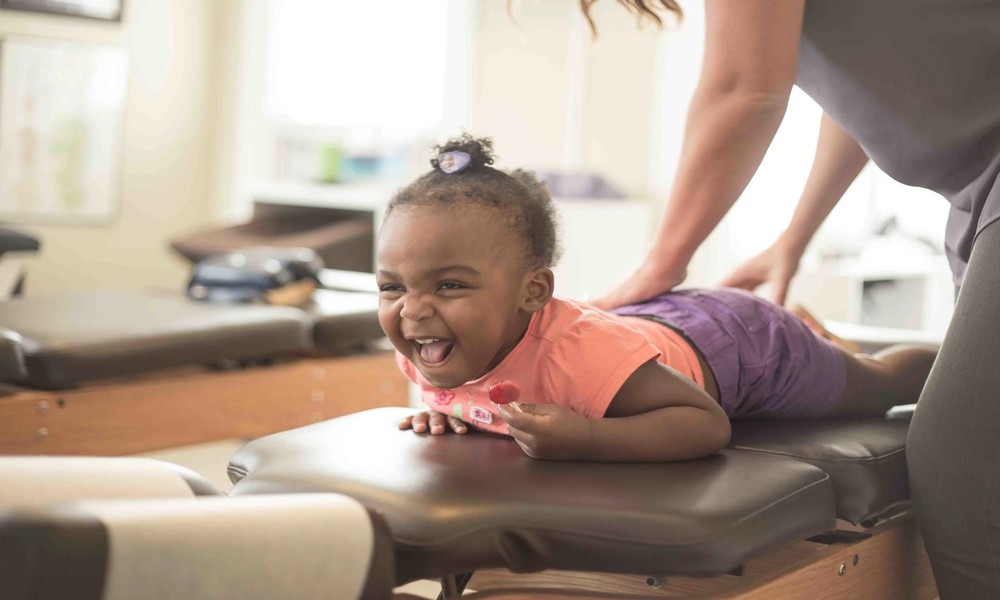
The gentle pressure used on a baby is closer to the amount you would use to test the ripeness of a tomato. There is no twisting, no popping sound, no force at all. Dr. Hannah uses sustained contact with a single finger to encourage motion in joints that have lost it. The whole adjustment often takes less than a minute.
For toddlers and older children, the technique scales up gradually. Some kids respond well to a manual adjustment by the time they are school age. Others do better with the Activator, a small spring-loaded instrument that delivers a quick, light tap without any of the movement that can make a child nervous. The level of force is always matched to the size of the patient. A four-year-old does not need, and will not get, the same adjustment as their dad.
Most kids find the appointment fun. The room is quiet, the visit is short, and there is no part of it that hurts.
The Reasons Parents Most Often Bring Kids In
A growing body deals with stresses that adults forget about. Birth itself is one of the most physically demanding events a person ever experiences, and the journey through the birth canal puts real strain on a newborn’s neck and spine. From there, falls, sports, backpacks, screens, and growth spurts all leave their mark.
A few patterns come up in the office often:
- Colic and difficulty settling in infants
- Trouble nursing on one side, where the baby keeps turning the same direction
- Recurrent ear infections, especially in toddlers
- Constipation that does not respond to dietary changes
- Sleep that is restless or interrupted in young children
- Headaches in school-age kids, often tied to posture or screen time
- Sports injuries from soccer, hockey, gymnastics, dance, and the rest of the Apple Valley youth sports lineup
- Growing pains, particularly in the legs at night
- Poor posture from heavy backpacks or long stretches at a desk
None of these are guaranteed to improve with chiropractic, and any responsible chiropractor will tell parents that up front. The cases where kids respond best tend to be the ones where the issue is mechanical: something in the spine or pelvis is not moving the way it should, and restoring that motion takes pressure off the nervous system.
How Safety Works in Practice
Pediatric chiropractic has been studied for decades. The risk profile is low when the practitioner has training specific to children and uses techniques appropriate to the age and size of the patient. Force is the variable that matters most, and a properly trained chiropractor uses a fraction of what an adult would receive.
Before any treatment begins at Dakota Chiropractic, Dr. Hannah goes through a full history, asks about the pregnancy and birth, any medications, any prior injuries, and any conditions that would change the approach. If something in that history points toward a problem outside the scope of chiropractic, she says so and refers out. The goal is not to treat every child who walks in. It is to figure out which children will actually benefit and to handle their care carefully.
When to Schedule a Visit
A few signs are worth paying attention to. A baby who consistently turns their head to one side and not the other, who arches their back during feeding, or who has trouble latching deserves a look. A toddler who keeps getting ear infections after multiple rounds of antibiotics often gets a second wind from chiropractic care. A school-age child who complains about headaches in the afternoon, or who comes off the soccer field limping the same way every Saturday, is usually carrying something mechanical that can be addressed.
A child who has been told they have flat feet, scoliosis, or any postural issue at a pediatric visit can also benefit from an evaluation. Chiropractic does not cure those conditions, but it often helps with the secondary tension and movement issues that follow.
What the First Appointment Looks Like at Dakota Chiropractic
A new pediatric visit at the Apple Valley office runs longer than a regular appointment. Dr. Hannah spends most of it talking with the parent and observing the child. A physical exam follows, scaled to the child’s age. If treatment makes sense, the first adjustment usually happens at that same visit. Parents stay in the room the entire time.
Most kids respond faster than adults to chiropractic care. A few visits, spaced out over a few weeks, often does what an adult might need months to achieve. From there, many families come back periodically when something flares up rather than on a fixed schedule.
A Gentle Option Worth Considering
Pediatric chiropractic is not a cure-all, and no honest chiropractor will pitch it as one. For the right child with the right issue, the results can be striking, and the care itself is gentle enough that there is little to lose in finding out. The team at Dakota Chiropractic sees kids from across Apple Valley and the south metro every week, from infants in their first month to teenagers between sports seasons. If something has been off with your child and the usual answers are not landing, a conversation with Dr. Hannah is a good place to start.










Recent Comments